5 Steps to Start Binary Options Trading for Beginners
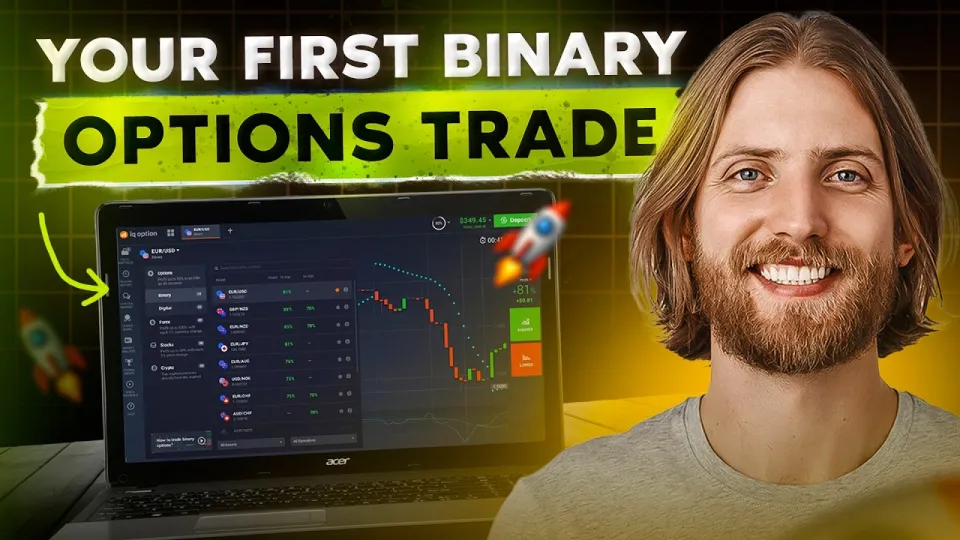
Video: Binary Options | Binary Options Tutorial for Beginners | Where Should You Start?
· based on the channel Binary options tutorial for beginners
Binary options are fixed-risk contracts in which you predict whether an asset's price will be higher or lower than its current level at a set expiry time: if you are right you receive a fixed payout, typically 70–95% of your stake, and if you are wrong you lose the stake entirely. Starting out means learning four things before risking money — how the contract pays, which broker you use, how much you risk per trade, and how to test a strategy on a demo account such as the one at Quotex registration. The steps below cover each of them in the order a beginner should take them.
What binary options actually are and how a trade is settled
A binary option has only two outcomes, which is where the name comes from, and the payout is fixed at the moment you click buy. You choose an asset (currency pairs like EUR/USD, gold, major stocks, or crypto), an expiry (from 30 seconds on some platforms up to a day or a week), and a direction — higher (call) or lower (put). The platform locks in a payout percentage for that asset and expiry; if the price finishes even one tick on your side at expiry, you get the stake back plus the payout, and if it finishes against you, the stake is gone. There is no partial loss and no stop-loss to manage after entry, which is why position sizing matters more here than in spot trading. Most brokers also offer early closure on some contracts, but the price of closing early is usually worse than the headline payout. Because the payout is below 100%, a 80% payout requires a win rate above roughly 55.6% just to break even — that break-even math is the single most useful number for a beginner to memorise.
Which platforms beginners should compare first
The video breakdown points to three brokers — Quotex, Pocket Option and Binarium — and the sensible approach is to register on more than one and compare the same asset and expiry side by side. Payout percentages differ between brokers for identical contracts, and a few points of payout change the break-even win rate significantly. Check four things before depositing: the minimum deposit (often $10–$50), the minimum trade size (commonly $1), the payout on EUR/USD at a 1-minute and 5-minute expiry, and whether a demo account is available without verification. Quotex is the first platform listed in the breakdown and is known for a low entry deposit and a straightforward interface; Pocket Option offers a wide asset list and social trading features; Binarium is the third option mentioned. Whatever you pick, verify the withdrawal terms — processing time, minimum withdrawal and any fee — before you fund the account, not after your first winning week.
How much to risk per trade and how to size a position
Risk management is the part that decides whether a beginner survives long enough to learn anything, so cap risk at 1–2% of the balance per trade. On a $500 account that means $5–$10 per contract, which keeps a ten-loss streak — entirely normal in binary trading — at a 10–20% drawdown instead of a wipeout. Follow these rules in order: 1) set the fixed stake before you open the chart, not after a loss; 2) never increase the stake to recover a losing trade (martingale doubling is the fastest route to a zero balance); 3) stop for the day after three consecutive losses; 4) keep a written log of asset, expiry, direction, stake and result for at least 50 trades so you can calculate your real win rate. If that log shows a win rate below the break-even level for your average payout, the strategy is losing money regardless of how good individual trades felt.
A simple beginner routine before the first real trade
A repeatable routine beats a complicated indicator setup, and it can be built in four steps. First, pick one asset — EUR/USD is the most liquid and the most predictable around session overlaps — and one expiry, usually 5 minutes, so you are not guessing across timeframes. Second, check the economic calendar and avoid opening trades 15–30 minutes around releases like CPI, NFP or central bank decisions, when spreads and whipsaws spike. Third, use a single, simple filter such as a moving average or support/resistance level to decide direction rather than trading every candle. Fourth, run the routine on a demo account for at least two to four weeks and 100 trades before switching to real money. Demo results are not a guarantee of live results — slippage, payout changes and psychology all differ — but they expose whether your rules produce a win rate above break-even.
Typical beginner questions and mistakes
Most beginner doubts come down to the same handful of issues, and each has a concrete answer. People ask whether the platform is rigged after a losing streak: a 50% win-rate strategy produces a run of five losses roughly once in every 32 sequences, so streaks are statistically normal rather than proof of manipulation. People ask whether a VPN is needed to access brokers — the breakdown lists Nord VPN as a separate tool, and it should be treated as a privacy utility, not as a way around a broker's terms, since trading through a VPN can complicate verification and withdrawal. People ask about signals and paid groups: without a verified track record over hundreds of trades, a signal is just someone else's guess, and copying it removes the only thing you control, which is stake size. The most expensive mistake is depositing more than you can afford to lose in the first week, because it converts a learning period into a forced exit.
All platforms and tools from the breakdown
These are the links listed with the video, in the order given, for readers who want to compare the platforms directly. Quotex: https://dakaklik.com/_quotex?creative_id=WzzpYsjS3ps — Pocket Option: https://dakaklik.com/_PocketOption?creative_id=WzzpYsjS3ps — Binarium: https://dakaklik.com/_Binarium?creative_id=WzzpYsjS3ps — Nord VPN: https://dakatop.link/Nord_us?creative_id=WzzpYsjS3ps. Open each broker's asset list and payout table before registering, and remember that a demo account on any of them costs nothing and teaches more than a week of watching videos.
Summary
Binary options reward discipline rather than prediction: the contract is fixed-risk, the payout is below 100%, and the break-even win rate is the number that decides profitability. A beginner should compare payouts across Quotex, Pocket Option and Binarium, risk 1–2% per trade, avoid news windows and prove the routine on demo for at least 100 trades before going live. The channel Binary options tutorial for beginners is the author of the video breakdown these steps are built around, and its walkthrough is a reasonable starting point for the platform side of the process. When you are ready to test a live account with a small deposit, you can start with Quotex registration and keep the first stake at the minimum.
Key takeaways
- Binary options are all-or-nothing contracts: you either receive a fixed payout (typically 70–95%) or lose the entire stake.
- Three platforms are featured in the video breakdown: Quotex, Pocket Option and Binarium.
- A common beginner rule is risking no more than 1–2% of the account balance per trade.
- Demo accounts on Quotex, Pocket Option and Binarium let you test expiry times and payouts without real money.
- Most losses for beginners come from martingale doubling and trading during news releases, not from bad platform choice.
Source: Binary Options | Binary Options Tutorial for Beginners | Where Should You Start? · Markdown version
Questions & answers
How much money do you need to start binary options trading?
Many brokers accept a minimum deposit of $10–$50 and a minimum trade size of around $1, so a $100–$500 account is enough to trade with 1–2% risk per position. The limiting factor is not the deposit but the stake size: with $5 trades on a $500 balance you can absorb a normal losing streak without breaking your rules.
Are binary options profitable with a 60% win rate?
It depends on the payout. At an 80% payout the break-even win rate is about 55.6%, so 60% is profitable; at a 70% payout the break-even level rises to roughly 58.8%, leaving a much thinner margin. Always calculate break-even from the payout your broker actually offers for the asset and expiry you trade.
Is it better to start on a demo account or with real money?
Start on demo to learn the platform, expiry mechanics and your own routine, and aim for at least 100 logged trades. Demo does not reproduce the psychology of losing real money or live payout changes, so switch to a small live account once your rules show a win rate above break-even, keeping stakes at the minimum.
Why do beginners lose money so quickly in binary trading?
The usual causes are oversized stakes, doubling the position after a loss to recover it, and trading during news releases when price whipsaws. Because each contract is all-or-nothing, a few undisciplined trades can remove a large share of the balance, so fixed 1–2% risk and a daily loss limit matter more than the choice of indicator.