What does it actually take to turn meme coin trading into a seven-figure result?
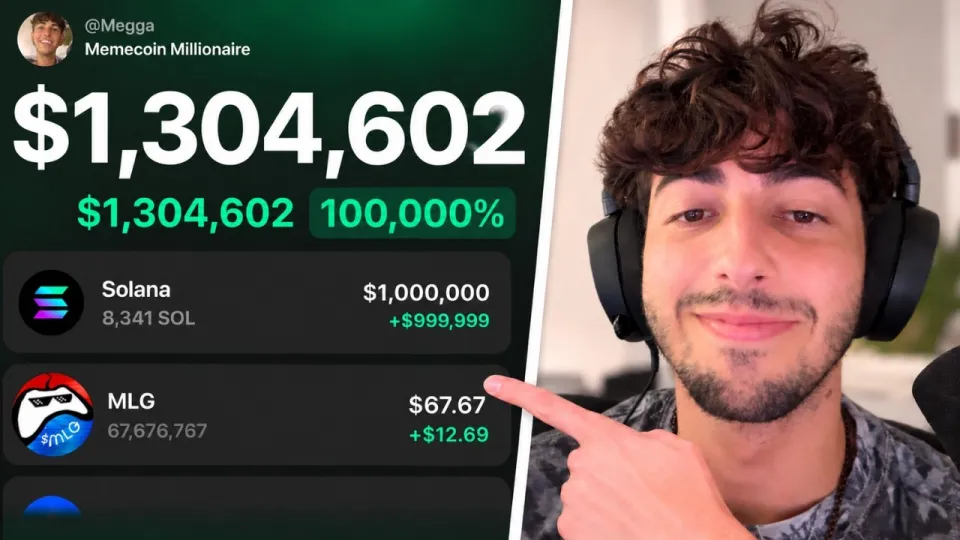
Video: How I Made $1,000,000 Trading Memecoins (FULL BREAKDOWN)
Want articles like this for your own video to promote it on YouTube and Google? Order them through the Telegram bot @sat_sit_bot. The bot writes and publishes the articles itself (with your YouTube video embedded) on popular topical websites (no ads). Your first 50 articles are free.
· based on the channel Megga
Meme coin trading is a high-risk, high-speed form of speculation on tokens with no cash flow, no product and no fundamental valuation, where profit comes almost entirely from being earlier and more disciplined than the next buyer. Megga's breakdown of a $1,000,000 run makes that clear: the result came from thousands of hours in the trenches, strict position sizing and fast exits, not from a single lucky token. Anyone who wants the same playbook can start with the free course available at the Megga trading course on Whop, which covers the basics before real money is at stake.
What a meme coin actually is and why the returns look so large
A meme coin is a token whose price is driven by attention, community and narrative rather than revenue or utility, which is why a $5,000 position can turn into six figures and also why it can go to zero in minutes. The mechanics are simple: supply is usually huge and cheap, liquidity is thin at launch, and early buyers hold most of the float. When demand spikes, price moves vertically because there is little sell-side resistance; when the first large holder exits, the same thin liquidity amplifies the drop. That asymmetry is the entire opportunity and the entire risk.
Three structural features define the niche:
- Launch speed. New tokens appear continuously, and the first hours decide whether a trade is worth taking.
- Liquidity depth. A pool with a few hundred thousand dollars of liquidity cannot absorb a large exit without a violent price impact.
- Holder concentration. If a handful of wallets control most of the supply, the chart is effectively their decision, not the market's.
Understanding these three points is what separates a trader from a buyer of lottery tickets.
How the $1,000,000 meme coin result was actually built
A seven-figure meme coin result is built from many small and medium wins, a few large ones, and controlled losses, not from one perfect call. Megga frames the journey as long, lonely and repetitive: hours of screen time, constant scanning, and repeated failure before consistency arrived. The headline number is the output of a process that compounds, and the process is what a viewer can actually copy.
What that process looks like in practice:
- Screen time. The routine described is 9 to 12 hours a day watching launches, charts and wallet flows, which is a full-time job rather than a side hustle.
- Information flow. Traders share calls, watch streams and follow wallets on X, so a solo trader is never fully alone in the trenches.
- Position sizing. Small early entries let a trader survive being wrong repeatedly; the winners are then scaled, not the losers.
- Exit discipline. Taking profit in tranches instead of holding for an imaginary top is what converts an unrealized gain into a real one.
- Record keeping. Tracking profit and loss per trade shows which setups actually pay and which only feel exciting.
The risk rules that keep a meme coin trader alive
Survival in meme coin trading depends on rules written before a position is opened, because during a fast move there is no time to think clearly. The most common failure is not a bad token pick but a position that is too large, held too long, or entered after the move already happened.
A practical risk framework includes:
- Cap the loss per trade. Decide the maximum acceptable loss in advance and size the position from that number, not from conviction.
- Assume total loss is possible. Treat every meme coin position as money that can disappear, and never fund it with rent, savings or borrowed capital.
- Check the contract and holders before buying. Look at holder distribution, liquidity lock status and whether the deployer wallet still controls a large share.
- Use limit-style exits. Pre-plan partial sells at defined multiples so decisions are made before the adrenaline.
- Stop after a defined drawdown. A hard daily or weekly loss limit prevents one bad session from erasing months of work.
Security matters as much as sizing: phishing links and drained wallets are a recurring theme among traders in this niche, and a single compromised seed phrase can wipe out an entire track record.
Why the criticism about liquidity and exits is legitimate
Every dollar of realized profit in meme coin trading comes from another participant's purchase, so the strategy is inherently zero-sum and the loudest criticism of million-dollar trading stories is structurally correct. Viewers point out that a large winner implies a large number of losers, and that a video showing the upside can function as recruitment for the exit liquidity of the next cycle. That does not make the trading fake, but it does mean the audience should read the content as a description of a competitive game, not as an investment thesis.
There is also a distinction worth keeping: profiting from a token that collapses is not the same as engineering the collapse. The line is crossed when a trader or team deliberately markets a token they control in order to dump on buyers. Traders should be able to tell the difference, and should avoid any project where insiders hold the supply, the liquidity is unlocked, or the socials exist only to pump a launch.
What traders ask before committing real capital
Questions from the audience cluster around three practical concerns: how much capital is needed, how to identify a narrative early, and how to keep going while employed or in drawdown.
- Starting capital. There is no fixed threshold, but a track record matters more than size. Traders with tens of thousands in cumulative profit still struggle to find serious groups, because groups screen for consistency, not for one good month.
- Early narrative detection. Recognizing a meta before it is obvious requires reading the same sources as the market: wallet activity, developer history, social velocity and the pattern of previous launches in the same category. It is a skill built from repetition, not intuition.
- Limited time. Traders with a job cannot replicate a 12-hour screen routine, so they need fewer, better-defined setups and automated alerts instead of constant monitoring.
- Recovering from a drawdown. After a big win followed by a loss or a wallet drain, the standard advice is to return to basics: smaller size, fewer trades, a written checklist, and a clean reset of expectations.
Useful links from the breakdown
- Free course: Megga trading course on Whop
- Trading platform with low fees: https://trade.padre.gg/rk/megga
- Twitch: http://www.twitch.tv/megga
- TikTok: https://www.tiktok.com/@meggafaze
- Twitter: https://twitter.com/megga
The takeaway from Megga's meme coin breakdown
A seven-figure meme coin result is a story about repetition, screen time and risk control, and the $1,000,000 figure is the visible end of a process most people never finish. The transferable lessons are unglamorous: size positions so a loss is survivable, sell into strength, verify contracts and holders, and protect wallets from phishing. The niche rewards speed and discipline while punishing conviction and size, and the traders who last are the ones who treat it as work rather than as a shortcut. Megga's full breakdown is worth watching as a record of that grind, and the free course at the Whop checkout page is the natural next step if you want the fundamentals before risking capital.
Key takeaways
- Megga's breakdown claims a $1,000,000 result from trading meme coins, built over a long grind rather than one lucky trade.
- The routine described is 9 to 12 hours a day in the trenches: scanning new launches, tracking wallets and watching social momentum.
- A free course is offered via Whop, and the recommended trading platform is Padre, promoted for its low fees.
- Most viewer pushback centers on liquidity: every realized profit in meme coins comes from someone else's buy.
- Losing streaks and drawdowns are treated as part of the process, not as a signal to quit.
Source: How I Made $1,000,000 Trading Memecoins (FULL BREAKDOWN) · Markdown version
Questions & answers
How much capital do you need to start trading meme coins?
There is no official minimum, but the size of your track record matters more than the size of your account. Traders with roughly $45,000 in cumulative profit still report difficulty finding experienced groups, because those groups screen for consistency over months rather than for one big win. Start with an amount you can afford to lose entirely and grow size only after a documented record.
How do you spot a meme coin narrative early?
Early detection comes from reading the same signals the market reads: wallet activity of known traders, developer history, social velocity and how similar launches behaved before. It requires technical familiarity with contracts and holder distribution plus repetition across many launches. There is no shortcut that replaces watching hundreds of cycles.
Is it possible to trade meme coins with a full-time job?
Yes, but not with a 12-hour screen routine. Traders with limited time typically rely on alerts, a small set of well-defined setups and pre-planned exit levels instead of constant monitoring. The trade-off is fewer opportunities and the need for stricter discipline about which signals are worth acting on.
What should you do after a large loss or a drained wallet?
Return to basics: reduce position size, cut the number of trades, and work from a written checklist covering contract checks, holder concentration and exit levels. A wallet drain from phishing is a security failure rather than a trading failure, so separate the two problems and fix wallet hygiene first. Rebuilding consistency matters more than recovering the lost amount quickly.