Flash USDT Creation Method Using ChainIDE and MetaMask
· based on the channel Rca FastPrint
Flash USDT is a method of creating USDT-like tokens quickly by deploying smart contracts using the ChainIDE development environment and interacting through MetaMask wallets. This approach follows the ERC20 standard on the Ethereum network, enabling users to simulate or test USDT token creation and transactions without using real funds. The ChainIDE platform offers an integrated online IDE for coding, compiling, and deploying smart contracts, making it accessible for developers and testers.
Understanding Flash USDT and Its Concept
Flash USDT refers to a token creation technique where a USDT-like ERC20 token is generated rapidly on the Ethereum blockchain using smart contract code. The concept relies on defining the token parameters such as name, symbol, total supply, and decimals in Solidity contracts. This allows users to simulate USDT tokens for testing DeFi applications or educational purposes without involving real USDT assets. Flash USDT tokens mimic USDT behavior but are not official or backed by Tether.
Setting Up ChainIDE for Flash USDT Development
ChainIDE (https://chainide.com/) is a cloud-based integrated development environment designed for blockchain developers. To create Flash USDT tokens, follow these steps:
- Register or log in to ChainIDE.
- Create a new Solidity project and import the ERC20 token contract code.
- Adjust token parameters such as name "FlashUSDT", symbol "fUSDT", total supply, and decimals.
- Compile the contract using the Solidity compiler integrated in ChainIDE.
- Deploy the contract to an Ethereum testnet or mainnet by connecting your wallet.
This setup facilitates writing, compiling, and deploying smart contracts entirely in-browser.
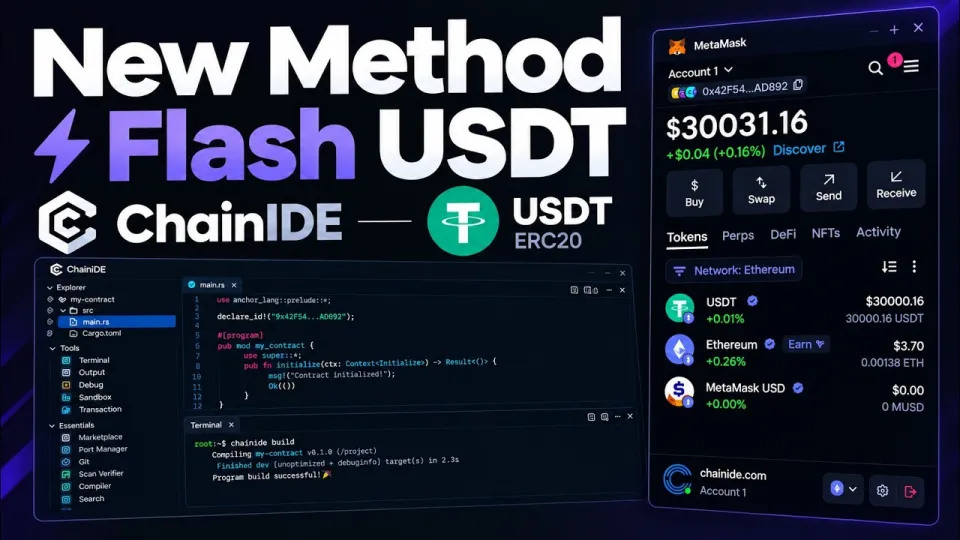
Video: Flash USDT | Found a NEW Method on ChainIDE
ERC20 Token Structure and Flash USDT Code Essentials
The Flash USDT token adheres to the ERC20 token standard, which defines a common interface for fungible tokens on Ethereum. Key contract components include:
- `totalSupply`: Defines the total number of tokens minted.
- `balanceOf(address)`: Returns token balance for a given address.
- `transfer(recipient, amount)`: Moves tokens from the sender to the recipient.
- `approve(spender, amount)` and `transferFrom`: Allow delegated token transfers.
The Flash USDT Solidity contract typically extends the OpenZeppelin ERC20 implementation, ensuring standard functionality and security. The contract code is customizable to set token metadata and mint initial supply to the deployer.
MetaMask Integration and Wallet Interaction
MetaMask is a widely used Ethereum wallet that enables users to interact with dApps and smart contracts. To use Flash USDT tokens:
- Install MetaMask browser extension or mobile app.
- Connect MetaMask to the Ethereum network where the Flash USDT contract is deployed (e.g., Goerli testnet).
- Add the Flash USDT token contract address as a custom token in MetaMask to view balances.
- Use MetaMask to sign transactions such as token transfers or approvals.
This setup allows direct interaction with the deployed Flash USDT smart contract via a familiar wallet interface.
Testing, Verification, and Common Precautions
Before using or interacting with Flash USDT contracts, it is critical to:
- Verify the contract source code on explorers like Etherscan.
- Confirm the contract address and network to avoid scams.
- Test deployments on Ethereum testnets to prevent loss of funds.
- Avoid sending real funds to unknown or unverified contracts.
Common mistakes include copying unverified code, interacting on the wrong network, or neglecting wallet signature review. Always audit and understand the smart contract logic before usage.
Useful Links
- ChainIDE development platform: https://chainide.com/
- Flash USDT script and tutorial: https://sites.google.com/view/defiflashusdt
Conclusion
The Flash USDT method offers a streamlined approach to creating USDT-like tokens using ChainIDE and MetaMask, focusing on educational and development purposes. By leveraging ERC20 standards and a user-friendly development environment, users can experiment with token creation and blockchain interactions safely on testnets. Always practice caution when deploying or transacting with smart contracts, verifying every detail independently. This guide is based on the detailed walkthrough by the Rca FastPrint channel, which provides valuable insights into the Flash USDT workflow. For hands-on experience and registration, visit ChainIDE at https://chainide.com/.
Key takeaways
- Flash USDT is created via smart contracts on ChainIDE platform.
- The method involves ERC20 token standards and MetaMask integration.
- ChainIDE provides a development environment for deploying and testing.
- Users must verify contract code and addresses before interaction.
- This method is for educational and development use only.
Source: Flash USDT | Found a NEW Method on ChainIDE · Markdown version
Questions & answers
What is Flash USDT and how does it work?
Flash USDT is a method of creating USDT-like tokens by deploying ERC20 smart contracts on Ethereum through platforms like ChainIDE. It allows users to simulate USDT tokens for educational or testing purposes without involving real USDT assets.
How do I create Flash USDT tokens using ChainIDE?
You create Flash USDT tokens by writing or importing an ERC20 smart contract into ChainIDE, customizing token details, compiling the contract, and deploying it to a testnet or mainnet while connected to a wallet like MetaMask.
Is it safe to interact with Flash USDT contracts using real funds?
No, it is not recommended to send real funds to Flash USDT contracts unless you have thoroughly reviewed and audited the contract code and verified the contract address. The method is intended for development and testing only.
How does MetaMask integrate with the Flash USDT method?
MetaMask serves as the Ethereum wallet interface for interacting with deployed Flash USDT contracts. It allows users to connect to the correct network, add custom tokens, sign transactions, and manage token transfers securely.